Summer Programs for Eighth Graders That Build Real Depth

The single most effective thing a rising 8th grader can do this summer is pursue one mentor-driven project that produces a concrete, evaluable output — not collect certificates from branded programs. Programs like the Stanford Middle School Scholars Program and NYU’s College and Career Lab demonstrate what rigorous, skills-first summer activity actually looks like. Top College Coach works with families to design exactly this kind of multi-year plan from 8th grade forward.
Three things you can do this week:
Identify one academic area your student genuinely wants to go deeper in (not just “likes”).
Find one mentor: a local college professor, a working professional, or a program coordinator willing to guide a project.
Draft a one-paragraph project scope with a clear end product (a report, a prototype, a competition entry).
Table of Contents
What should a rising 8th grader actually gain from summer?
The goal is not a résumé line. It is a set of skills and a documented output that shows selective colleges, years from now, that your student pursues ideas with sustained seriousness.
Effective summer activity at this stage builds academic writing, research methodology, and problem-solving — the foundational skills that make high school coursework and eventually college applications coherent. Breadth of discovery matters early; sustained depth matters more as the years progress. A student who spends 8th grade sampling three unrelated programs has less to show than one who spends it going deep on a single question.
Six outcomes that genuinely matter to selective colleges:
A finished project, report, or portfolio piece with a clear scope and conclusion
Evidence of mentorship (a named adult who guided the work)
A timeline spanning weeks or months, not a single weekend
One new technical or analytical skill the student can name and demonstrate
Some form of leadership or real-world impact, however small
A written reflection the student can articulate in an interview or essay
Pro Tip: Choose a project with a specific, assessable end product before the summer starts. “Study marine biology” is not a project. “Write a 10-page literature review on microplastic accumulation in Florida estuaries” is.
1. Mentored independent research or apprenticeships
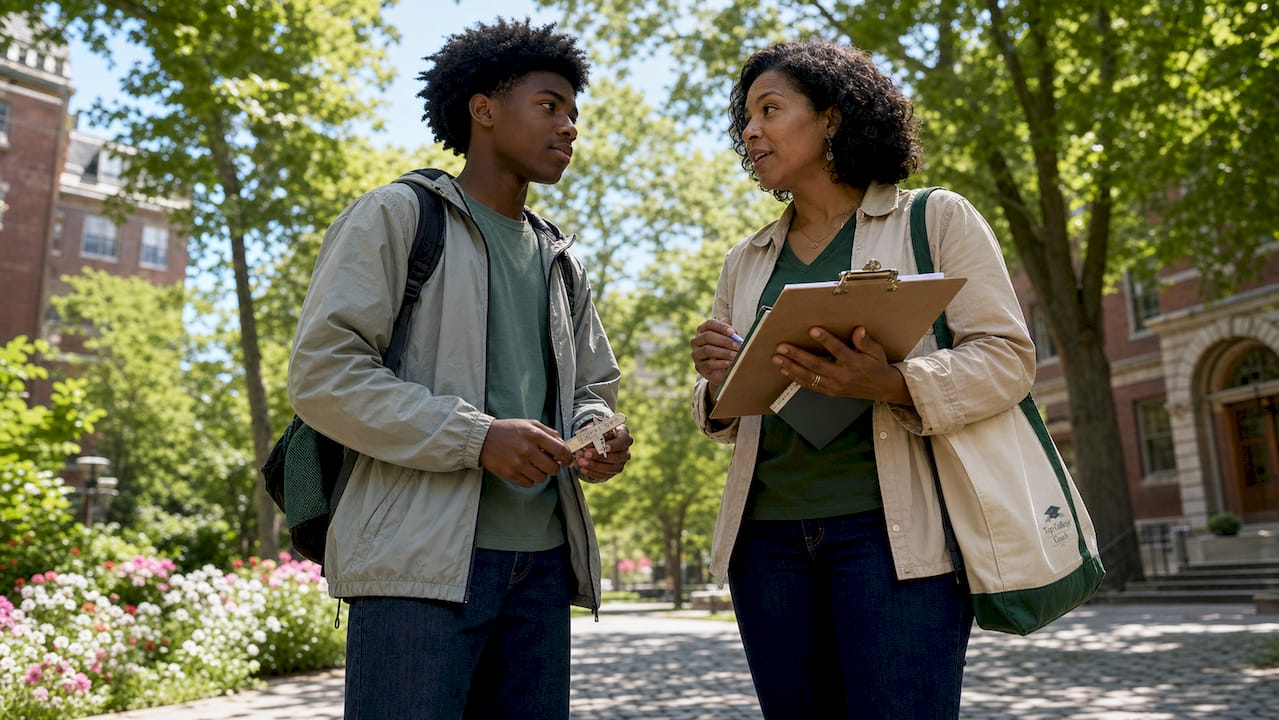
Duration: 6–12 weeks, often extending into the school year. Output: a written report, research poster, or competition entry. This category produces the strongest admissions evidence because it mirrors what college students actually do. A student who completes a mentored research project with a faculty member or professional mentor can reference that work across essays, interviews, and activity descriptions for years.
2. Project-based STEM and AI bootcamps
Duration: 2–4 weeks, intensive. Output: a working prototype, app, or technical write-up. STEM programs for eighth graders that emphasize building over listening are far more useful than lecture-heavy courses. The student should leave with something they made, not just a certificate. Ask programs directly: what does a typical student produce by the final day?
3. Writing and research workshops
Duration: 1–3 weeks. Output: a polished essay, short story, or research paper. Strong writing workshops teach students to construct and defend arguments — a skill that pays dividends in AP courses, college essays, and beyond. Look for workshops that require revision cycles and provide individualized feedback, not just group critique.
4. Selective middle-school academic pipelines
Programs like the Stanford Middle School Scholars Program are tuition-free, enroll small cohorts, and combine a three-week summer course with follow-up weekly meetings during the academic year. That multi-semester structure is what separates a developmental program from a summer camp. NYU’s programs similarly focus on college-readiness skills and hands-on exposure to multiple disciplines. These are worth prioritizing precisely because they are designed for long-term development, not short-term brand value.
5. Local college courses and dual enrollment
Duration: 4–8 weeks. Output: a transcript entry and, ideally, a paper or project. A motivated 8th grader who completes a community college course in statistics, computer science, or composition has a verifiable academic record and a concrete skill. Faculty relationships formed here can become mentorship relationships in high school.
6. Long-term multi-year programs
Some of the most powerful summer activities for teens are not single summers at all. Programs that span multiple years — or that connect a summer experience to an academic-year project — give students the sustained timeline that admissions officers find persuasive. If your student finds a program or mentor they connect with, the goal should be to continue that relationship, not move on to the next brand.
7. Competitions and independent projects
Regional science fairs, coding hackathons, math olympiads, and writing competitions produce concrete artifacts that admissions officers can evaluate directly. When resources are limited, a mentored micro-research project or competition entry yields more admissions value than multiple short elective courses. The artifact is the evidence.
Pro Tip: Structure any independent project using a simple cycle: explore the question, acquire the skills you need, build or write, document the process, reflect on what you learned. That structure produces a portfolio piece, not just a summer memory.
Program Type | Typical Duration | Key Output | Mentorship Intensity | Cost Range |
Mentored research/apprenticeship | 6–12 weeks | Research paper, poster | High | Free–$500 |
STEM/AI bootcamp | 2–4 weeks | Prototype, app | Medium | $500–$2,500 |
Writing/research workshop | 1–3 weeks | Essay, paper | Medium–High | $200–$2,500 |
Selective academic pipeline | Summer + school year | Portfolio, transcript | High | Free–$1,500 |
Local college course | 4–8 weeks | Transcript, project | Medium | $200–$1,500 |
Competition/independent project | Ongoing | Competition entry, artifact | Variable | Free–$200 |
How to evaluate any program before you enroll
Before committing time or money, run every program through this checklist:
Does the program name a specific final deliverable, or does it describe “enriching experiences”?
Can you see sample student work from past cohorts?
What is the mentor-to-student ratio, and how often do mentors meet individually with students?
What are the faculty or mentor credentials? Are they active researchers or practitioners?
What is the cohort size? Smaller is almost always better for mentorship quality.
Does the program have an application process with real selection criteria?
Is financial aid or scholarship funding available, and what is the process?
What follow-up support exists after the program ends?
Questions to ask program staff directly: “Can you share a sample of student work from last year?” and “What does a typical weekly check-in with a mentor look like?” If staff cannot answer both questions specifically, that is a signal worth taking seriously.
Red-flag answers that should disqualify a program: vague language about “college preparation” with no named deliverable, any suggestion that attendance improves admissions odds at a specific university, and pressure to fundraise to cover fees.
Pro Tip: Ask to see mentor bios and current mentee work before you apply. Programs with clear milestone reviews and documented student outputs consistently produce better results than those offering only lectures and group activities.
A concrete timeline for parents to follow now
Timeframe | Action |
Now (June–July) | Identify one interest area; draft a project scope; contact local college departments or programs |
July–August | Apply to fall-start programs; confirm mentor; gather materials and set project milestones |
August–September | Begin project work; establish weekly check-in rhythm with mentor |
October–December | Complete first draft of output; document process with photos, notes, or a journal |
January–March | Revise and finalize output; identify competitions or publications to submit to |
Spring | Reflect on what was learned; plan how this experience connects to 9th-grade coursework and activities |
Immediate actions for this week:
Email the department coordinator at your nearest community college or university to ask about research apprenticeship opportunities for motivated middle-school students.
Write a one-paragraph project scope: topic, question, method, and end product.
Identify two or three programs with August or September application deadlines and pull their requirements now.
What summer programs actually cost — and where to find value
Summer enrichment spans a wide range. Tuition-free programs like Stanford’s Middle School Scholars Program and NYU’s College and Career Lab exist specifically for students from lower-income backgrounds and are among the most rigorous options available. Local community college courses typically run $200–$1,500 depending on the institution and credit load. Mid-range online mentored programs and writing workshops generally fall in the $500–$2,500 range. Branded residential pre-college programs at elite universities can be very expensive for a two- to three-week session.
Investigative reporting has documented that some of these high-cost programs encourage families to fundraise to cover fees — a practice worth scrutinizing carefully.
High-value, lower-cost alternatives that produce comparable admissions evidence:
Virtual mentored research projects with a local faculty member (often free or low-cost)
Community college courses with a transferable transcript
Regional competitions (science fairs, hackathons, writing contests) with entry fees under $100
Volunteer research apprenticeships at local nonprofits, hospitals, or environmental organizations
For financial aid, check each program’s website for need-based scholarships, and contact program coordinators directly — many programs have unpublicized funding for strong applicants who ask.
How selective colleges actually view summer programs
Summer programs are enrichment, not admissions pipelines. That distinction matters practically, not just philosophically.
As Washington Post reporting makes clear, elite universities enroll far more students in summer programs than they admit as freshmen each year. These programs are significant revenue sources for institutions. Attendance does not signal to admissions officers that a student is a preferred candidate.
What admissions officers do respond to is sustained intellectual curiosity — a student who pursued one question across multiple years, produced something real, and can speak about it with genuine depth. A single branded summer certificate, absent any follow-through, reads as a résumé item. A year-long project that started with a summer program and produced a competition entry, a research paper, or a portfolio piece reads as evidence of character.
Starting in 8th grade gives your student four years to build that story. The extracurricular depth that selective colleges find persuasive is not assembled in a single summer.
Red flags and marketing traps to watch for
The summer program market is large, and some programs market aggressively to anxious families. Recognize these warning signs:
“Guaranteed admissions advantage” or any language implying attendance improves odds at a specific school. No program can promise this, and reputable ones do not try.
Pressure to fundraise to cover program fees. Some programs suggest families solicit donations from relatives and community members to cover $5,000–$10,000 tuition. This is a financial burden, not a merit signal.
Vague deliverables. If a program cannot tell you what a student produces by the final day, the program is selling an experience, not a skill.
No sample student work. Any program confident in its outcomes will show you what past students made.
Brand over mentorship. A program that leads with its university affiliation but cannot describe its mentor-to-student ratio or weekly structure is prioritizing marketing over education.
Pro Tip: Search the program name alongside “admissions” and “review” before applying. Parent forums and college counseling communities often surface honest assessments that program websites do not.
How Top College Coach helps you plan a summer that actually matters
Choosing the right summer activity for a rising 8th grader is one decision in a four-year strategy. Top College Coach helps families design that full trajectory: identifying the academic interests worth developing, selecting summer experiences that produce real outputs, matching students with mentors, and translating those experiences into compelling application narratives when the time comes.
Services relevant to families at this stage include multi-year academic and extracurricular planning, project scoping and mentor matching for independent research, and long-term admissions strategy that connects 8th-grade summer work to senior-year essays and interviews. Every engagement draws on Top College Coach’s track record of helping students gain admission to Ivy League and Top 20 universities, backed by 5-star reviews from families who started planning early.
If you want a clear picture of what your student should be doing this summer and how it fits into a four-year plan, book a free admissions strategy session with Top College Coach. The conversation is free; the clarity is worth it.
Key Takeaways
Depth beats breadth: one mentor-driven project with a concrete output is worth more to a selective-college application than a list of short branded programs.
Point | Details |
Prioritize concrete outputs | Choose activities that end with a research paper, prototype, or competition entry admissions officers can evaluate. |
Mentorship quality matters most | Verify mentor availability, weekly check-ins, and sample student work before enrolling in any program. |
Brand names don’t equal pipelines | Elite university summer programs enroll far more students than they admit as freshmen; attendance is not an admissions advantage. |
Start the four-year story now | 8th grade is the beginning of a trajectory; sustained depth across high school is what selective colleges find persuasive. |
Top College Coach | Provides multi-year planning, mentor matching, and application strategy for families starting in 8th grade. |
The case for depth over decoration
Most parents I speak with arrive with the same anxiety: their student is talented, the competition feels intense, and every summer feels like a missed opportunity if it isn’t filled with the “right” program. That anxiety is understandable. It is also, in most cases, pointed in the wrong direction.
The families who see the strongest outcomes are not the ones who enrolled their student in the most prestigious-sounding programs. They are the ones who helped their student find one thing worth caring about deeply, then built the conditions for that student to pursue it seriously over time. A student who spends 8th grade doing a mentored environmental research project, continues it in 9th grade, enters a regional competition in 10th, and writes about it in a senior essay has a story. A student who attended four different branded summer programs has a list.
The practical tradeoff is real: sustained depth requires saying no to some things. It requires a student who is willing to sit with a hard question for months rather than collect new experiences every few weeks. That is not a sacrifice. That is exactly the kind of intellectual character selective colleges are trying to identify.
Start now, go deep, and document everything.
Useful sources for further research
Stanford Middle School Scholars Program — Program details, admissions criteria, and eligibility for this tuition-free, small-cohort academic pipeline. Use to verify program structure and apply if your student qualifies.
SMSSP Admissions — Specific admissions requirements, income eligibility, and application timeline for Stanford’s middle-school program.
NYU Middle School Programs: College Readiness — Overview of NYU’s free middle-school programs, including the College and Career Lab. Use to understand what institutionally subsidized college-readiness programming looks like.
Washington Post: Elite University Summer Programs — Investigative reporting on the revenue model behind branded pre-college programs and their limited admissions impact. Essential reading before spending thousands on a summer program.
Better Mind Labs: What Should an 8th Grader Do Over the Summer — Practitioner guidance on project-based summer work and the engineering design cycle for student projects.
Duke Pre-College Middle School Courses — Structured middle-school courses taught by Duke Ph.D. students and faculty across topics from aerospace engineering to digital storytelling. Use to compare program structure and faculty credentials.
Top College Coach: Summer Admissions Planning — Detailed guidance on converting summer experiences into application narratives, with admissions-focused framing for each stage of high school.
8th Grade Trip Planning: Educational Travel — Partner resource on experiential and educational travel options for 8th graders, useful for families considering off-site or travel-based learning components.
Recommended
Comments