Early Action vs. Early Decision: How to Choose
- Aug 15
- 13 min read
Updated: Aug 16

Early Decision is binding; Early Action is not. That single distinction shapes everything from your financial flexibility to how many schools you can apply to early. Here are the three differences that matter most:
Commitment: An ED acceptance obligates you to enroll and withdraw all other applications. An EA acceptance carries no such requirement.
Application limits: You may apply ED to only one college. Standard EA lets you apply to multiple schools simultaneously.
Financial aid comparison: ED applicants receive a single aid offer and typically cannot compare packages from other schools. EA preserves that ability through National Decision Day on May 1.
According to College Board, roughly 450 U.S. colleges offer some form of early plan, so you have real options. Most early deadlines fall in early November, with decisions returned by mid-December. Because policies vary significantly from school to school, always verify the exact rules on each college’s official admissions page before you apply.
Key Takeaways
The core rule is simple: apply Early Decision only when your top choice is clear and your family can afford the school without comparing aid offers from other colleges.
Point | Details |
ED is binding; EA is not | An ED acceptance requires enrollment; EA lets you decide by May 1. |
One school for ED, many for EA | You may apply ED to only one college; standard EA allows multiple early applications. |
ED limits aid comparison | ED applicants receive one offer and cannot compare packages; EA preserves that flexibility. |
Deadlines cluster in November | Most ED and EA deadlines fall in early November, with decisions by mid-December. |
Top College Coach can help | A readiness check with Top College Coach helps you assess whether ED or EA fits your profile and finances. |
Table of Contents
What is Early Decision, and what does “binding” actually mean?
Early Decision (ED) is a binding application plan. When a college admits you ED, you are contractually committed to enroll there, and you must withdraw any other pending applications within a specified window, usually a few days to two weeks after the decision. The commitment is not just a gentleman’s agreement; students, parents, and high school counselors typically sign an ED agreement form acknowledging the obligation.
You may apply ED to only one college. That single-school limit is the rule, not a suggestion. Many schools offer two rounds: ED I, with deadlines typically in early November and decisions by mid-December, and ED II, a later binding round with deadlines usually in early January and decisions in late January or February. ED II gives students who were denied or deferred from their ED I school, or who simply needed more time to decide, a second chance at a binding early commitment.
The financial release: what it is and how it works
The binding nature of ED does have one meaningful exception. If the college’s financial aid offer demonstrably fails to meet your family’s demonstrated need, many schools will formally release you from the commitment. This is not automatic. You must submit documentation, typically including your Expected Family Contribution (EFC) or Student Aid Index (SAI), tax records, and a written explanation of why the package is insufficient. The college’s financial aid office reviews the request, and approval is at the institution’s discretion. If released, you are free to withdraw and pursue other schools. The key word is documented: vague dissatisfaction with an offer rarely qualifies. Families who pursue this path should act quickly, since the window to request a release is narrow.
What is Early Action, and how does it differ from binding plans?
Early Action (EA) is nonbinding. A college can admit you in December, and you are under no obligation to commit until May 1, the national reply date. That flexibility is the defining feature: you can hold multiple acceptances, compare financial aid packages, visit campuses in the spring, and make a fully informed decision.
Standard EA typically allows you to apply to as many schools as you like during the early round. That said, a growing number of selective colleges have introduced variants that impose restrictions even within a nonbinding framework:
Restrictive Early Action (REA) / Single-Choice Early Action (SCEA): Nonbinding, but limits you to applying early to only one private institution. You may still apply early to public universities in most cases, but you cannot submit an early application to another private college. Harvard, Yale, Princeton, and Stanford all use this model. Check each school’s policy word-for-word, because the exact scope of restrictions varies.
Standard EA: No restriction on the number of early applications. You can apply EA to several schools simultaneously and compare all offers before May 1.
EA deadlines typically mirror ED deadlines, falling in early November for most schools, with decisions returned by mid-December. Because EA rules genuinely differ by institution, reading the college’s published admissions policy before you apply is not optional.
What are the real benefits and drawbacks of applying early?
The advantages of applying early are real, but so are the tradeoffs. Here is a side-by-side look at what you gain and what you give up.
Factor | Early Decision (ED) | Early Action (EA) |
Binding commitment | Yes — must enroll if admitted | No — decide by May 1 |
Applications allowed | One school only | Multiple schools (standard EA) |
Financial aid comparison | Not possible — single offer | Possible — compare multiple packages |
Admissions signal | Strong demonstrated interest | Moderate demonstrated interest |
Decision timeline | Mid-December (ED I) | Mid-December |
Stress reduction if admitted | High — search ends early | Moderate — still deciding |
Equity considerations | Higher risk for aid-dependent families | Lower risk — flexibility preserved |
The benefits of applying early are genuine. You get an answer months before your peers, which can relieve significant stress. Admissions offices often interpret an early application as a signal of genuine interest in their school, and that demonstrated interest can matter at colleges that track it. For students with a clear top choice and a family confident about affordability, ED can be a strong strategic move.
The drawbacks are equally real. The binding commitment of ED removes your ability to compare aid offers, which is a serious financial risk for families who need the best possible package. If you are denied or deferred, you face a compressed timeline to complete regular-decision applications, sometimes as little as two weeks before January deadlines. There is also an equity dimension worth naming directly: ED disproportionately benefits families who can afford to commit without comparing aid, which is one reason some counselors and researchers have raised concerns about its fairness to lower-income applicants.
How does applying early affect your admission chances and financial aid?
The admissions advantage: real, but complicated
You will hear that applying ED improves your odds. The data does show higher acceptance rates in early pools at many selective schools, but U.S. News cautions that this observed advantage is partly a selection effect. Students who apply ED tend to be more certain about their choice, often have stronger applications, and may fit a school’s profile particularly well. Separating the causal effect of applying ED from the characteristics of the students who self-select into it is genuinely difficult. Treat any claimed “ED boost” as a signal, not a guarantee.
EA applicants also benefit from being reviewed early, before the pool grows more competitive in the regular round. The advantage is generally smaller than ED’s, but the flexibility you retain is worth weighing against it.
Financial aid: the core risk of ED
ED applicants receive a single financial aid offer and, by the terms of the binding commitment, are expected to accept it if it meets their demonstrated need. You cannot use a competing offer from another school as leverage. EA applicants, by contrast, can hold multiple acceptances through May 1 and compare packages side by side.
Before applying ED, families should take these concrete steps:
Use the school’s Net Price Calculator to estimate your expected cost. Every college is required to publish one.
Request an estimated award letter from the financial aid office before you apply, if the school offers that option. Some do.
Set a firm affordability threshold as a family. If the school’s estimated cost exceeds what you can manage without comparing other offers, EA or Regular Decision is the safer path.
Understand the release process before you apply, not after. Know what documentation the school requires and how quickly you would need to act.
Pro Tip: If your family qualifies for need-based aid and you have not yet run the school’s Net Price Calculator, do that before you submit an ED application. The number you get is not a guarantee, but it will tell you whether committing blindly is a reasonable risk.
How do you decide between ED, EA, and Regular Decision?
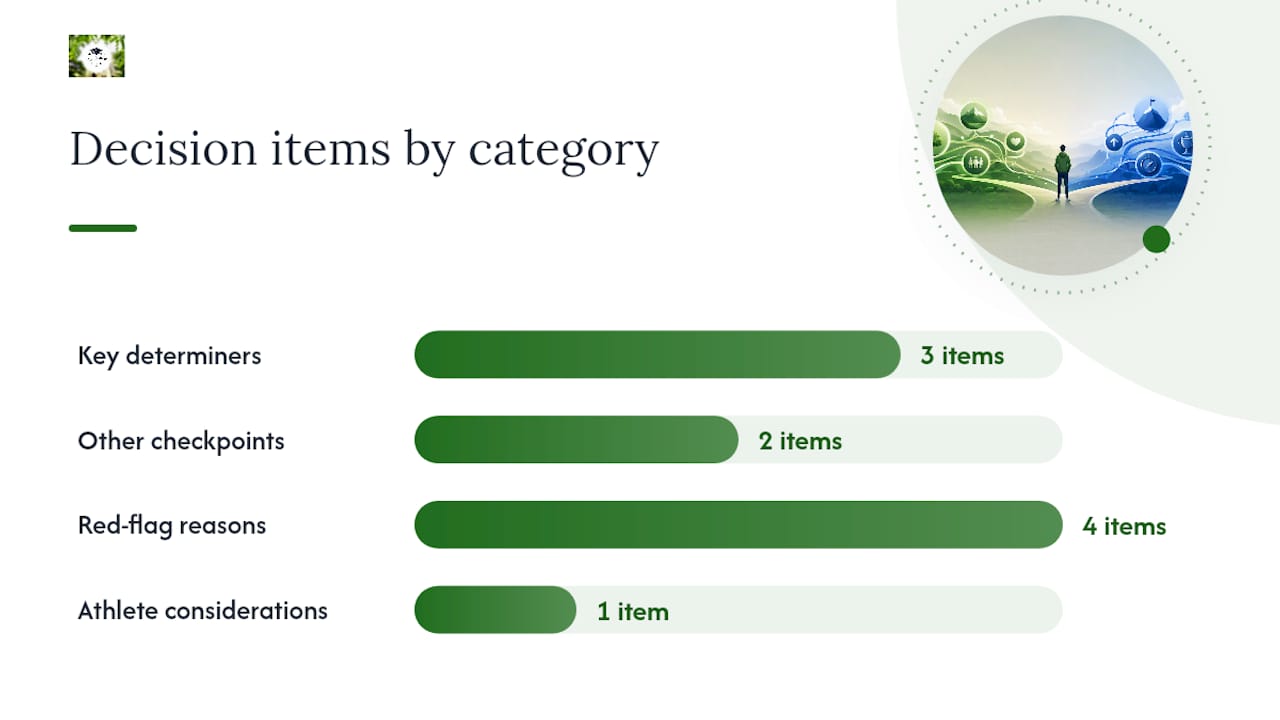
Work through these questions in order. The first three are the ones that actually determine the right path.
Is this truly your top-choice school? Not “one of your favorites” — your clear first choice. If you would be disappointed to attend any other school, ED may fit. If you are still genuinely weighing two or three options, it does not.
Can your family afford this school without comparing aid offers? Run the Net Price Calculator. If the estimated cost is manageable and you are confident in the number, ED is financially viable. If you need to see competing offers to make the math work, stop here and choose EA or Regular Decision.
Is your application competitive for this school’s early pool? Review the school’s published class profile and compare your academic trajectory against admitted students. Applying ED to a school where your profile is significantly below the median is a high-risk move with limited upside.
Does the school offer EA or REA as an alternative? If your top choice uses Restrictive EA instead of ED, you can apply early without the binding commitment. That is often the better option for students who want an early answer but are not ready to commit financially.
Have you talked to your school counselor? A counselor who knows your profile and your family’s financial situation can catch red flags you might miss. This step is not optional for high-stakes decisions.
Red flags that should steer you away from ED: uncertain family finances, a need to compare aid offers, insufficient time to prepare strong regular-decision applications as a backup, or any lingering doubt about whether this is truly your first choice.
For student-athletes, the timing of athletic recruiting commitments can intersect with early admissions in ways that require separate planning. Understanding why early commitment decisions happen for athletes can help families navigate both processes without creating conflicts.
What should you do after an early admissions decision?
If you are accepted ED
Confirm your enrollment by the deadline the college specifies, typically within a few days. Pay your enrollment deposit. Notify your high school counselor so they can send your final transcript and inform other colleges that you are withdrawing your applications. If the financial aid package is inadequate, act immediately: contact the financial aid office in writing, document your family’s need, and formally request a review or release. Do not wait.

If you are deferred
A deferral means the college is moving your application to the regular decision pool for reconsideration. You should:
Send a letter of continued interest (LOCI) reaffirming your commitment to the school and noting any meaningful updates to your application since you submitted it.
Ask your counselor to send an updated school report if your grades have improved.
Submit any new test scores, awards, or accomplishments that strengthen your file.
Continue pursuing your regular-decision applications with full effort. A deferral is not a soft acceptance.
If you are denied or waitlisted
A denial from an early round is final. Move on quickly: submit your remaining regular-decision applications, and make sure they are as strong as possible. Because early decisions arrive around mid-December, you may have as little as two to three weeks before some regular-decision deadlines. This is precisely why having your essays, recommendations, and test scores ready before you submit your early application is not just good advice; it is a practical necessity.
If you are placed on a waitlist, follow the college’s instructions for indicating continued interest, and treat it as a low-probability outcome while you pursue other schools.
Common variants: Restrictive EA and Early Decision II
Restrictive / Single-Choice Early Action
REA and SCEA are frequently confused with ED, but the distinction matters. Both are nonbinding: an acceptance does not obligate you to enroll. What they do restrict is where else you can apply early. Under a typical REA or SCEA policy, you may not submit an early application to any other private college. Applications to public universities are usually permitted, but verify this in the school’s published policy because the exact language varies. Harvard’s Restrictive Early Action program is one of the most well-known examples. Reading the policy word-for-word before you apply is the only way to avoid an accidental violation, which can result in rescinded admission.
Early Decision II
ED II is a second binding round offered by many colleges. It functions identically to ED I in terms of commitment: if admitted, you must enroll. The difference is timing. ED II deadlines typically fall in early January, with decisions returned in late January or February. Students use ED II when they were denied or deferred from their ED I school and have since identified a new clear first choice, or when they simply needed more time to finalize their decision. It is a genuine second chance at a binding early commitment, not a consolation round.
Typical early admissions calendar
Quick reference: common deadlines and decision windows
BestColleges confirms that most ED and EA deadlines fall in early November, with decisions returned by mid-December, and that ED II deadlines are typically in early January. One practical implication: if you plan to submit October SAT or ACT scores, confirm that your testing date gives enough time for scores to be reported before the early deadline. Many students cut this closer than they realize. For a full picture of how these windows fit into the broader admissions calendar, the 2026 college admissions timeline guide walks through every key date from junior year through May 1.
What counselors actually advise about ED vs. EA
Three signals consistently point toward ED being the right call: you have a clear, undisputed first choice; your family’s estimated cost at that school is affordable without needing to compare offers; and your application profile is competitive relative to the school’s published admit data. When all three are true, ED can be a sound strategic decision. When even one is uncertain, the calculus shifts.
Here is how these signals play out in practice. A student with a 3.9 GPA, strong test scores, and a family that has run the Net Price Calculator and confirmed the cost is workable applies ED to their first-choice school. They are admitted in December and enroll confidently. That is the scenario ED is designed for. A different student applies ED to a reach school because they love the campus, but their family has not modeled the financial aid outcome. They are admitted, the package covers far less than expected, and they spend December scrambling to document a financial hardship case for a release. That is the scenario ED is not designed for.
On the counseling side, coordinating an ED application means more than hitting the deadline. Fee waivers, if applicable, need to be requested in advance. Interviews, where offered, should be scheduled early. Teacher recommendations should be requested in September, not October. The college admissions advice resources at Top College Coach walk through each of these steps in detail.
Pro Tip: Before submitting an ED application, ask your school counselor to review the ED agreement form with you. Counselors sign it too, and a good counselor will flag any concerns about your financial situation or application readiness before you commit.
A note on strategy from our team
We work with students and families at every stage of this decision, and the pattern we see most often is not students applying ED when they should not. It is students who have a genuine first choice but talk themselves out of ED because the process feels uncertain. Clarity about your top choice and an honest financial conversation with your family are the two inputs that make this decision straightforward. If you have both, the path forward is usually clear. If you are missing either one, EA or Regular Decision gives you the room to figure it out without a binding commitment. For school-specific guidance, our Harvard application guide and MIT early admission guide show how these principles apply to two of the most selective programs in the country.
How Top College Coach supports your early-application strategy
Choosing between ED and EA is one of the highest-stakes decisions in the college admissions process, and getting it wrong costs families real money and real opportunities. At Top College Coach, we help students and parents work through exactly this decision: assessing financial readiness, evaluating application competitiveness against a school’s admitted profile, reviewing essays before early deadlines, and preparing a strong backup plan in case of deferral or denial.

Our counselors, including former admissions officers and current Ivy League mentors, have guided students through ED readiness checks that have led to acceptances at Ivy League and Top 20 universities. We are based in Orlando, Florida, and work with families across the country. If you are weighing an early application and want a second opinion before you commit, book a consultation with Top College Coach to get personalized guidance grounded in your specific profile and financial situation.
Sources
Use these sources to verify policies and read college-specific rules before you apply:
Always confirm the final policy wording on each college’s official admissions page. Published policies can change from cycle to cycle, and the school’s own language is the authoritative source.
FAQ
Is it better to apply early action or early decision?
It depends on your financial situation and how certain you are about your top choice. ED is the stronger strategic signal, but only makes sense when your family can commit without comparing aid offers. EA gives you an early answer with full flexibility to compare packages by May 1.
Does early action improve your chances of admission?
EA applicants are reviewed in a smaller, earlier pool, which can be an advantage, but the effect is generally smaller than the observed ED advantage. As U.S. News notes, much of the early-pool advantage reflects the strength of students who self-select into early rounds, not purely the timing of the application.
Is there a downside to early action?
The main downside is a compressed preparation timeline. EA deadlines fall in early November, which means essays, recommendations, and test scores must be ready weeks earlier than regular-decision applicants. Some schools also use Restrictive EA, which limits where else you can apply early.
Is Harvard early action or early decision?
Harvard uses Restrictive Early Action (REA), which is nonbinding but limits you to applying early to only one private institution. You can review the exact terms on Harvard’s admissions page. You are not required to enroll if admitted, but you cannot simultaneously apply early to other private colleges.
Can you back out of an early decision acceptance?
Yes, under specific circumstances. If the financial aid package demonstrably fails to meet your family’s need, most colleges will consider a formal request for release with supporting documentation. Approval is not guaranteed, and the process requires prompt action after the decision arrives.
Recommended
Comments