Social Media's Role in College Admissions: 2026 Guide

Social media is now a formal part of how many admissions officers evaluate applicants, shaping perceptions of character and behavior well beyond the transcript. The role of social media in college admissions has grown from a curiosity to a real factor that can open doors or close them. At Top College Coach, we work with students every day who are surprised to learn how much their online presence matters. This guide gives you and your family a clear picture of what admissions officers actually look for, what the risks are, and how to build a profile that works in your favor.
How do college admissions officers use social media?
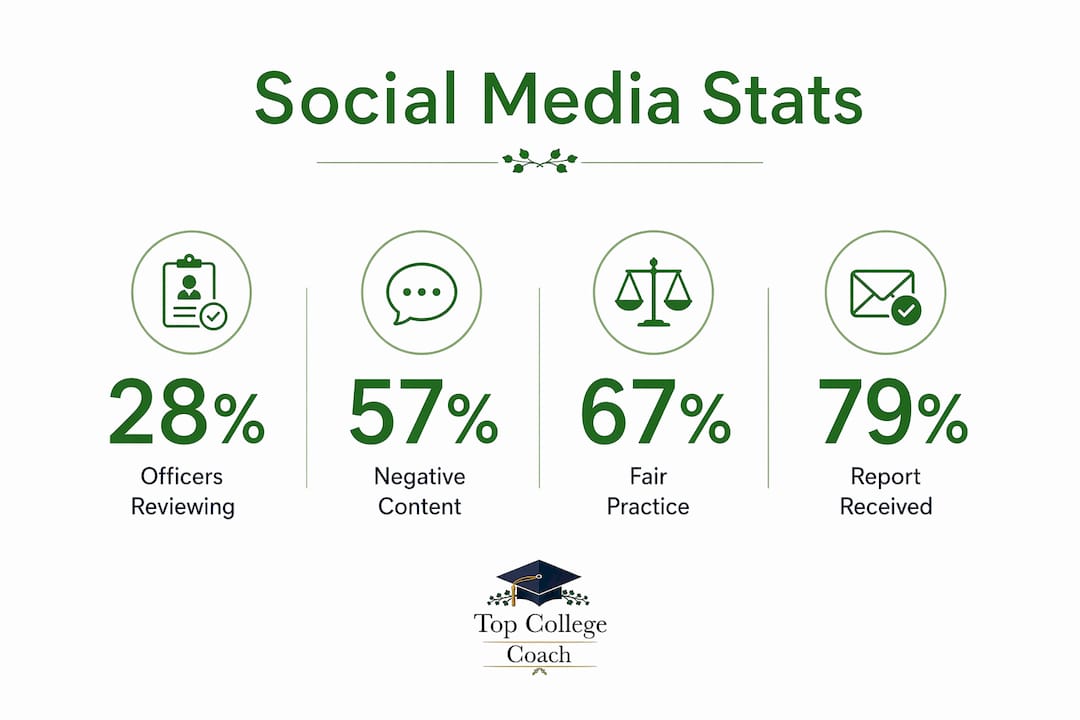
Social media gives admissions officers a window into who an applicant really is. 28% of admissions officers report visiting applicants’ social media profiles, and 67% consider it fair to do so. That means more than one in four reviewers may pull up your Instagram, X (formerly Twitter), or LinkedIn before making a decision.
What are they looking for? Admissions review of social media targets campus community risk and consistency with an applicant’s narrative rather than routine full-profile audits. An officer who reads your essay about community leadership may search your name to see if your online presence backs that story up. A mismatch between your application and your public posts raises questions.

The findings from those searches skew negative. Admissions officers find negative content 57% of the time when checking social media, while only 38% find anything positive. That gap is significant. It means the odds of a social media check helping you are lower than the odds of it hurting you, unless you are intentional about what you post.
Not every school reviews profiles equally. Public universities like the University of California system publicly state they do not use social media in admissions, while private colleges check more frequently. If your target list includes selective private schools, treat your online presence as part of your application.
Social media also reveals more about a student’s character and interests than academics alone, complementing traditional application materials. A student who writes about a passion for environmental science but never posts anything related to that interest may seem less convincing to a skeptical reviewer.
Can private or deleted posts still affect your application?
Private profiles are not a guaranteed defense. Private social media profiles are not foolproof since content can be screenshotted and shared, affecting admissions decisions. A post you shared with 12 friends can reach an admissions office if one of those friends decides to forward it.
The most cited example is Harvard in 2017. At least 10 Harvard students lost their admissions offers that year due to offensive memes shared in a private Facebook group. The group was not public. The content was not searchable. It still cost those students their spots. That case changed how seriously families need to think about private group chats and closed communities.
Admissions offices also act on reports from peers, teachers, or school officials. 79% of college registrars and officers monitor social media during admissions or review problematic content brought to their attention. You do not need to be publicly searchable for a concern to reach an admissions committee.
Deleting posts after you apply is reactive and riskier than proactive curation. Screenshots travel faster than delete buttons. The better approach is to build good habits now, before you are in the middle of an application cycle.
Pro Tip: Set a recurring reminder every three months to audit your profiles. Search your own name in Google and review the first two pages of results. What you see is what an admissions officer sees.
What steps can students take to build a strong online presence?
A positive social media presence for college admissions does not mean scrubbing your personality. It means being intentional. Follow these steps to get your profiles working for you.
Audit every platform. Search your name on Google, Instagram, X, TikTok, and YouTube. Look at what is public. Ask yourself whether each post reflects the person you describe in your application essays.
Remove or archive questionable content. Anything involving offensive language, substance use, harassment, or inflammatory opinions should come down. Do not wait until senior year. Start now.
Adjust privacy settings thoughtfully. Set personal accounts to private where appropriate, but remember that privacy settings are a layer of protection, not a guarantee. Treat every post as if it could be seen.
Build a public presence that tells your story. If you volunteer at an animal shelter, post about it. If you code, share a project. If you lead a club, document your work. Using social media intentionally allows students to highlight their strengths and positively affect admissions outcomes.
Engage respectfully with college accounts. Comment thoughtfully on posts from schools you are applying to. Ask genuine questions. This kind of engagement reflects demonstrated interest and shows you are paying attention to campus life.
Keep your tone professional on public accounts. You do not need to sound like a press release. But avoid sarcasm, profanity, or hot takes that could be misread without context.
Pro Tip: Create a LinkedIn profile in your junior year. It is the one platform where a polished, professional presence is always viewed positively by admissions officers and future employers alike.
Pairing your social media audit with a review of your college admissions timeline helps you schedule these steps before application deadlines hit.
How can social media help you research and connect with colleges?
Social media is not only a risk to manage. Used well, it is one of the best free research tools available to applicants. Here is how to put it to work:
Follow official college accounts. Schools post about campus events, faculty research, student life, and admissions tips in real time. Following these accounts gives you material to reference in your essays and interviews.
Join admitted student groups. Many schools create Facebook or Discord groups for admitted students. These communities answer questions that official websites do not, from roommate matching to course selection.
Watch student-created content. TikTok and YouTube are full of honest student perspectives on dorms, dining, class sizes, and campus culture. This content helps you decide whether a school is actually a good fit before you commit.
Gather essay insights. When a school posts about a new program, a faculty award, or a community initiative, that detail can become the “why this school” anchor in your application essay. Specificity signals genuine interest.
Engaging with official college social media accounts positively reflects a student’s genuine interest and can be viewed favorably by admissions counselors. That engagement is most effective when it is authentic. Commenting “great campus!” on every post reads as hollow. Asking a specific question about a research lab or a service learning program reads as real.
The social media influence on admissions runs in both directions. Schools use it to evaluate you, and you can use it to evaluate them. Students who research schools deeply through social media tend to write stronger, more specific application essays. That specificity is one of the factors covered in the secrets of college admissions that separates competitive applications from average ones.
Key takeaways
Social media is an active part of the college admissions process, and students who manage their online presence with intention gain a real advantage over those who do not.
Point | Details |
Officers do check profiles | 28% of admissions officers review social media, and 67% consider it fair to do so. |
Negative content dominates | Officers find negative content 57% of the time, so the default risk is higher than the reward. |
Private posts are not safe | Screenshots and peer reports have led to rescinded offers, including at Harvard in 2017. |
Proactive curation works | Posting about real interests and activities builds an online presence that supports your application. |
Social media aids research | Following college accounts and student creators gives you specific details that strengthen essays and interviews. |
Your digital footprint is part of your application story
I have worked with hundreds of students through Top College Coach, and the ones who struggle most with this topic are not the ones who posted something risky. They are the ones who have no online presence at all. Admissions officers are human. When they search a name and find nothing, they sometimes wonder why.
The students who do it right are not performing a version of themselves online. They are documenting what they actually care about. One student I worked with had spent two summers teaching coding to middle schoolers in her neighborhood. She had never posted about it. When we built out her LinkedIn and added a few Instagram posts showing the workshops, her application suddenly had texture that her transcript alone could not provide.
The anxiety families feel about social media during admissions is real, but it is often misdirected. The focus should be on proactive digital curation rather than reactive scrubbing. Scrubbing after the fact is damage control. Curation from the start is a genuine advantage.
One more thing worth saying directly: your digital footprint does not disappear after admissions. Employers, graduate schools, and professional networks will search your name for decades. The habits you build now around thoughtful, authentic posting will serve you long after the acceptance letters arrive.
— Randy Pryor, Founder of Top College Coach
How Top College Coach helps students put their best foot forward
Navigating the admissions process means managing more than grades and test scores. Your online presence, your essay narrative, and your demonstrated interest all work together to tell your story.
At Top College Coach, our counselors help students build complete, compelling applications that hold up under scrutiny, including how social media affects college entry decisions. We work with students from Orlando and across the country to craft authentic application stories and prepare every piece of the profile. Whether you need help auditing your digital presence or building an admissions strategy from the ground up, our team brings the experience to guide you. Book a free admissions strategy session with Top College Coach and get a clear plan built around your strengths.
FAQ
Do colleges check social media profiles during admissions?
28% of admissions officers report checking applicants’ social media profiles, and 67% believe it is fair to do so. Private colleges check more frequently than public universities.
Can a private social media post get my admission rescinded?
Yes. At least 10 Harvard students lost their offers in 2017 after offensive content shared in a private Facebook group was reported to admissions. Private settings do not prevent screenshots or peer reports.
What do admissions officers look for on social media?
Officers primarily look for red flags such as harassment, threats, or behavior that conflicts with an applicant’s application narrative. Positive content that supports an applicant’s stated interests can also make a favorable impression.
How does social media influence on admissions differ by school type?
Public universities like the University of California system publicly state they do not use social media in admissions. Selective private colleges are more likely to review profiles, especially when concerns are flagged.
What is the best social media strategy for college applicants?
Audit all public profiles, remove questionable content, and post consistently about real interests and activities. Engage authentically with official college accounts to reflect genuine interest and complement your application essays.
Recommended
Comments