What Is the College Application Process? A 2026 Guide

The college application process is a step-by-step procedure high school students follow to apply for college admission, covering everything from building a school list to submitting final materials before deadlines. Most students underestimate how many moving parts are involved. A single application can require standardized test scores, a personal essay within the Common App’s 250 to 650 word limit, two to three recommendation letters, a detailed activity list, and a completed FAFSA form. Understanding each component before senior year begins is what separates organized, confident applicants from those scrambling in November.
What are the core steps in the college application process?
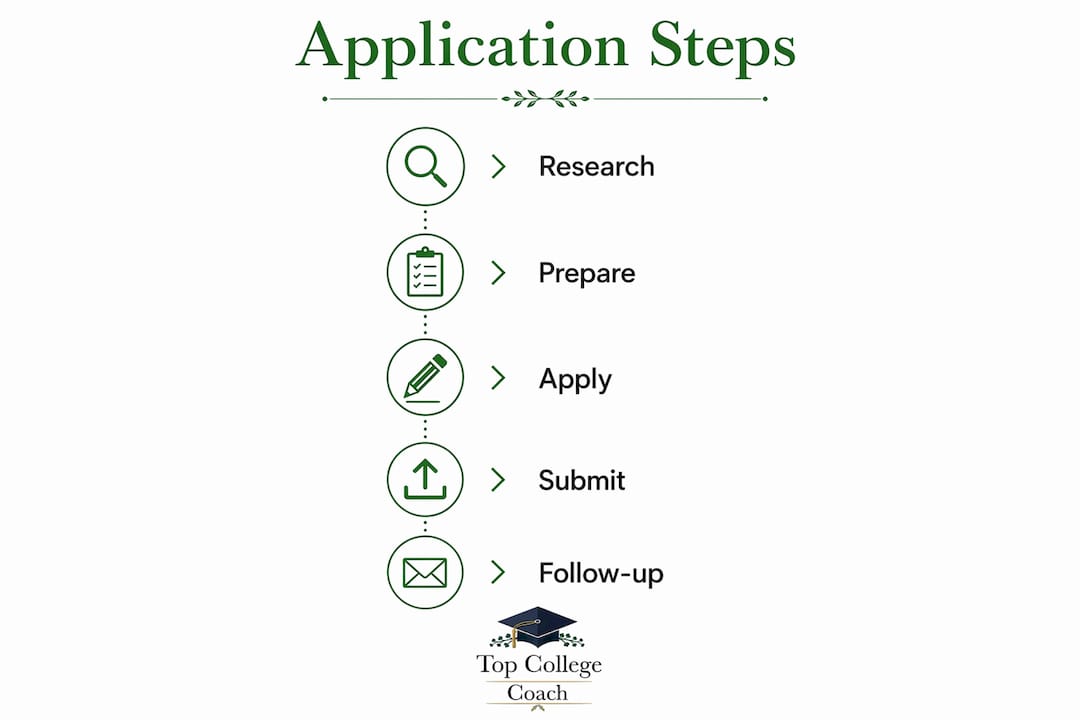
The college application workflow follows a standard multi-step sequence, though each school adds its own requirements on top of the foundation. Treating it as a customized checklist rather than a universal formula gives you a real advantage.
Here are the core steps every student should follow:
Build your college list. Research schools based on academic fit, location, size, and programs. Aim for a balanced list with reach, match, and safety schools. Tools like College Board’s BigFuture help you filter by major, cost, and acceptance rate. Campus visits, virtual tours, and information sessions sharpen your instincts about where you genuinely want to spend four years.
Register for and complete standardized tests. Many schools still consider SAT or ACT scores, while others remain test-optional. Check each school’s current policy. Register early because popular test dates fill quickly, and retakes require planning.
Request letters of recommendation. Ask teachers, counselors, or mentors who know your work well. Give them at least six to eight weeks of lead time. A strong recommendation letter speaks to your character and intellectual curiosity, not just your grades.
Write your personal essay and supplemental essays. The Common App personal statement is your primary narrative. Supplemental essays are school-specific and often carry significant weight with admissions readers.
Complete and submit the FAFSA. The Free Application for Federal Student Aid determines your eligibility for grants, loans, and work-study. Submit it as early as possible to meet institutional priority deadlines.
Complete school-specific applications and verify all materials. Log into each school’s portal to confirm that test scores, transcripts, and recommendation letters have been received before the deadline.
Pro Tip: Create a master spreadsheet with every school’s application portal login, required materials, and deadline. Color-code by status: not started, in progress, and submitted. This single habit prevents the most common submission errors.
How do deadlines and application timelines impact your chances?

Deadlines in college admissions are not suggestions. Missing application deadlines is the most common avoidable mistake students make, and it can close doors to schools that would have been strong fits. Knowing the difference between deadline types is the first step toward building a realistic timeline.
Key deadline categories to understand:
Early Decision (ED): Binding commitment, typically due November 1 or 15. Acceptance rates at many selective schools are meaningfully higher in the ED round.
Early Action (EA): Non-binding early submission, also typically November 1 or 15. What does college early action mean in practice? It means you get a decision by mid-December without committing to attend.
Regular Decision (RD): Most deadlines fall January 1 or 15, with decisions released in late March or April.
FAFSA priority deadlines: The federal FAFSA deadline is June 30, but institutional priority deadlines arrive much earlier. Virginia Commonwealth University, for example, sets its priority deadline at February 1. Filing late means competing for a smaller pool of remaining aid funds.
The recommended timeline starts in the summer before senior year. Use June and July to draft your personal statement, research supplemental essay prompts, and finalize your college list. August through October is for refining essays, completing applications, and submitting early round materials. November through January covers Regular Decision submissions and financial aid follow-up.
Pro Tip: Set calendar reminders two weeks before every deadline, not the night before. Two weeks gives you time to fix a technical glitch, chase a missing recommendation letter, or revise an essay that reads flat under fresh eyes.
What role do the Common App essay, recommendations, and activity lists play?
Each component of your application tells admissions officers something different about who you are. Understanding what each piece communicates helps you approach it with purpose rather than obligation.
Common App essay and word limits
The Common App essay carries a strict word range of 250 to 650 words. The platform blocks submission below 250 words and truncates anything beyond 650, which means an essay cut off mid-sentence is what the admissions officer reads. Planning your drafts early and editing to fit within this range is the single highest-impact skill you can develop as an applicant.
Supplemental essays and school-specific research
Supplemental essays often matter more than the primary Common App essay because they require specific, non-generic research and tailored writing for each institution. A “Why Us?” essay that could apply to any school signals low interest. One that references a specific professor’s research, a unique program, or a campus tradition signals genuine fit. Admissions readers notice the difference immediately.
Recommendation letters and activity lists
Strong recommendation letters confirm what your transcript suggests and add texture admissions officers cannot see in grades alone. Your activity list is equally strategic. The Common App gives you 10 activity slots, each with a 150-character description. Use precise, active language to describe your role and impact, not just your participation. “Founded robotics club, grew membership from 8 to 47 students” outperforms “Member of robotics club” every time.
Component | What it communicates |
Common App essay | Voice, self-awareness, and narrative ability |
Supplemental essays | Genuine interest and fit with each specific school |
Recommendation letters | Character, work ethic, and intellectual engagement |
Activity list | Leadership, commitment, and real-world impact |
FAFSA | Financial need and eligibility for institutional aid |
Why college application organization and strategy matter
College application strategy is defined as the deliberate, planned approach students take to present their strongest possible profile to each school on their list. Without it, even talented students submit generic applications that fail to stand out.
The risks of poor organization are concrete:
A late FAFSA filing can cost thousands of dollars in grant money that goes to earlier applicants.
An essay that exceeds 650 words gets truncated, ending mid-thought in the admissions reader’s queue.
Missing a supplemental essay prompt entirely can result in an incomplete application and automatic disqualification at some schools.
Submitting the same essay to every school without tailoring it signals low effort and low interest.
Starting essays in summer before senior year is the clearest predictor of application quality. Students who draft their personal statement in June and July have time for five or six revisions. Students who start in October typically submit their second draft. The difference in quality is visible to every experienced admissions reader.
Pro Tip: Treat your college list as a living document. Revisit it after you draft your “Why Us?” essays. If you cannot write a specific, enthusiastic essay for a school, reconsider whether it belongs on your list.
What tools and resources help students through the process?
Several platforms and resources make the college application process more manageable when used correctly.
Common Application (commonapp.org): The Common App platform opens August 1 each year. It allows students to enter personal data, activities, and essays once and send them to over 1,000 member schools. Familiarize yourself with the interface before August so you are not learning the system under deadline pressure.
FAFSA (studentaid.gov): The federal financial aid application opens October 1 for the following academic year. Gather tax documents and FSA ID credentials in advance to avoid processing delays.
College Board’s BigFuture: A free research tool for comparing schools by major, cost, size, and location. Useful for building and narrowing your initial college list.
College admissions counselors: Professional guidance from an experienced admissions counselor improves essay quality, application strategy, and deadline management. Counselors who have worked with Ivy League and Top 20 admissions processes bring pattern recognition that no checklist can replicate.
Essay editing tools: Grammarly and Hemingway Editor catch surface-level errors, but they do not replace human feedback on voice, structure, and authenticity. Use them as a first pass, not a final review.
For student athletes, understanding how academic fit intersects with recruiting adds another layer of strategy to the school selection process.
Key takeaways
A well-organized, strategically planned college application process is the most reliable path to admission at your target schools.
Point | Details |
Start essays in summer | Drafting your personal statement before senior year allows time for multiple strong revisions. |
Know your deadline types | Early Action, Early Decision, and Regular Decision each carry different implications for strategy and commitment. |
FAFSA timing matters | Filing by institutional priority deadlines, not just the federal June 30 date, maximizes financial aid eligibility. |
Tailor every application | Generic supplemental essays signal low interest; school-specific writing demonstrates genuine fit. |
Use the right tools | Common App, FAFSA, and a qualified admissions counselor each address a different part of the process. |
What I’ve learned from watching students navigate this process
I have worked with hundreds of students through the college application process, and the pattern I see most often is not a lack of talent. It is a lack of timing. Students who start their essays in the summer consistently submit more authentic, polished work than those who start in October, regardless of GPA or test scores. The essay written under pressure reads like it was written under pressure.
The second thing I have noticed is that students underestimate the supplemental essays. They spend weeks on the Common App personal statement and then dash off a “Why Us?” essay in an afternoon. Admissions officers at schools like Georgetown, Vanderbilt, and Northwestern read thousands of applications. A supplemental essay that references a specific course, a named faculty member, or a unique campus program tells them you did your homework. That specificity is rare, and it is remembered.
My advice to every family I work with: treat the college application process as a project with a real deadline, not a task you fit in around everything else. Build a timeline in June. Assign weekly goals. Review progress monthly. The students who approach it this way arrive at their submission dates calm, confident, and proud of what they submitted. That is the goal.
— Randy Pryor, Founder - Top College Coach
How Top College Coach can help you succeed
At Top College Coach, we guide students and families through every stage of the college application process, from building the right school list to submitting polished, deadline-ready applications. Our counselors have a proven track record helping students gain admission to Ivy League and Top 20 universities, and we bring that same focused strategy to every student we work with. Whether you need help with essay drafting, deadline management, or full application strategy, we are here to support you. Start with a free admissions strategy session and get a personalized plan built around your goals, your timeline, and the schools you are targeting.
FAQ
What is the college application process?
The college application process is the sequence of steps students follow to apply for college admission, including building a school list, writing essays, gathering recommendation letters, completing the FAFSA, and submitting applications before deadlines. Most students apply through the Common Application platform, which serves over 1,000 member schools.
How does the Common App work?
The Common App platform opens August 1 and allows students to complete one application and send it to multiple schools. It includes a personal essay with a strict 250 to 650 word limit, an activity list, and school-specific supplemental sections.
What does Early Action mean in college admissions?
Early Action is a non-binding application option with deadlines typically on November 1 or 15, allowing students to receive admissions decisions by mid-December without committing to attend. It differs from Early Decision, which is a binding agreement to enroll if accepted.
When should I submit the FAFSA?
Submit the FAFSA as early as possible after it opens on October 1, and always before your target schools’ priority deadlines. Many colleges set priority deadlines in February, well before the federal June 30 cutoff, and earlier filing improves access to institutional grant funding.
How early should I start working on college applications?
Begin drafting your personal statement and researching supplemental essay prompts in the summer before senior year. Students who start essays early produce stronger, more polished applications than those who begin in the fall under deadline pressure.
Recommended
Comments